Tuesday, 28 February 2023

Northumberland Trig Bagger


Here's your muppet of a blogger embarking on another local 'collecting' obsession. It started a few years ago with Wainwright-bagging in the Lakes (I might get this one completed during 2023 - I've got 49 of the 214 fells left to do); I then thought I'd walk the entire North-East coast from Staithes to the Scottish Border in stages (two days of walking left here, I reckon) ... and now it's time to call in at all the surviving trig points for the county of Northumberland.

It all came about as the result of a gift. Knowing of my addictive personality for this sort of thing, my son, Matthew, bought me this for Christmas:


... so I thought: why not? Not being a driver, though, I shall be dragging my wife, Angie, along with me over the next few years in an attempt to complete the set before I become too unfit (or die). Needless to say, my good wife will be my official photographer.
 
I've already been to a few of the landmarks in question over the last 30/40/50 years, but I shall probably do them all again just for the fun of it. The picture at the top of this post is the climax of 'bagging' trip No.1, being that officially known as 'Brunton Bridge Farm' trig-point on Brunton Lane, Kingston Park. It's a tricky little customer to find, being buried in a hedge and up against a garden fence on the busy roadside. Only 164 to go then.

Pointless, I know, but it gets me out the house. I would be interested to know if anyone out there has embarked on the same, or similar, long-term expedition. 

P.S. Don't worry, I shall not be boring you all with an account of each and every trip. But I'll keep you abreast of my progress from time to time. Yawn.

Friday, 17 February 2023

Favourite Newcastle Books No.4: 'Newcastle upon Tyne: It's Growth and Achievement'


When I first became interested in the history of my hometown in the late 1980s I had a look around the local bookshops and the libraries to see what I could find on the topic. I was astonished to discover that there were no recent histories available. The best I could do was this effort by S.Middlebrook, Senior History Master at the city's Royal Grammar School, which had been published as long ago as 1950. Of all the tomes I have acquired since, this remains probably the best of the lot.

As nothing like a comprehensive history of Newcastle had been produced for a long time prior to this book (60+ years), and nothing else would follow for several more decades, Middlebrook's effort enjoyed a special place in the hearts of historically-minded Novocastrians for a very long time. But even this book had its problems. The text was finished as early as 1946, but publication was delayed by various difficulties encountered by printers and publishers in the late 1940s (whatever they were - was paper rationed? 😆).

As you can imagine (thanks to the occupation of its author) this reads very much like a text book. But that gives it a certain air of authority, and is kind of comforting. By his own admission, Middlebrook relied (of course) on the work of earlier historians for the really early stuff, but he invested a great deal of his own time researching everything after about 1820. Unlike most previous historians of the city's past, the author avoided surrounding the straightforward facts with an "air of romantic glamour" (as he puts it - and he's right).


The main thread is the economic development of the town and city, but it is much more than that. It is a social history, too; and Newcastle's place in the grand scheme of things - the wider geographical and historical setting - is carefully chronicled. It is a little light on historic buildings and famous personalities, but don't let that put you off. 

Amazingly, it has never (as far as I am aware) been re-published following its initial appearance in 1950. However, there are always copies to be found on Amazon, eBay, and the like - and even, occasionally, in second-hand bookshops. You've just gotta get a copy.

Newcastle upon Tyne: Its Growth and Achievement, by S.Middlebrook, published by Newcastle Chronicle & Journal Ltd, 1950 (hardback, 361 pages).

Tuesday, 7 February 2023

Cocklawburn Beach & Thereabouts


Looking south from the access road

You'll be happy to learn that my wife and I's North-East coastal walk (Staithes to Scottish Border) is approaching its conclusion. We've only a couple of stretches to go now, up near the Border; and three weeks ago we knocked off a fair chunk betwixt Waren Mill and Spittal - and very interesting it was, too. Blessed with two gorgeous winter days, we covered twenty-odd miles of this incredible stretch of English coastline. Stunning, stunning, stunning.

Of the many beautiful and interesting items on offer, I should like to point you in the direction of one spot in particular: Cocklawburn Beach. I had never been there before - hadn't even heard of it, in fact - and thought it a lovely little place, with, it transpires, an interesting history.

We approached from the south. Having stuck rigidly to the official coastal path for several miles, we ventured a few yards off the same when we clocked this little beauty on a hillock overlooking the coast: 

Gun emplacement

View from inside gun emplacement, looking south

This is no pillbox, as evidenced by the rather large 'pillar-box'-type slot! Turns out (with reference to the info panel, below), that it was home to a rather large piece of WWII ordnance. It really is a belter of a spot, and you can freely access and wander within its still near perfect interior.

Info panel (click to expand)

The information board gives you a pretty good oversight of the area, with its old lime kilns, geology, natural history, as well as the obvious military stuff. As we moved on fairly swiftly, I didn't get a chance to properly explore the immediate environs via the little tour suggested on the board, but its an interesting story, and will hopefully prompt you to spend some time there. The panel can be found in one of the bay's car parks, and afterwards we spied an opportunity to angle down from the official path and onto Cocklawburn Beach for a delightful couple of hundred yards walk north, until a rocky outcrop (Saltpan Rocks - more industry!) forced us back onto the waymarked route. Nice, though.

Looking south again, after we'd clambered off the beach

If you're taking your car, the dead-end access road leads into the bay from the village of Scremerston to the NW. It was busy when we were there in mid January, so can only imagine what it'd be like at the height of summer! There are, though, a few car parks to be found along the said road, as can be discerned from the info panel above. 

And there's far more to the story of Cocklawburn Beach/Bay then I've hinted at here, so do check out the links below - especially prior to your visit, so that, unlike me, you don't miss out on any interesting bits.

More info can be found here. And an especially interesting look at the area's history can be found here (with a further link near the foot of the page, too, for even more info).

P.S. For anyone who's interested, we parked our car at Spittal, walked half a mile to Tweedmouth to catch a 477 bus (Wed & Sat only), then alighted at the start of the Holy Island Causeway and walked the 9 miles north back to our car. Highly recommended.

Monday, 30 January 2023

Cricket in Newcastle: A Brief History

Newcastle, being a walled and vulnerable town for much of its history, didn’t have much room for the likes of cricket in yonder times. And, as it quickly exploded during the Industrial Revolution and beyond, there was barely enough living space, never mind the large expanse of level grass needed for the game. Besides, cricket was slow to catch on up here in the North-East, of course.

By around 1800, cricket looked pretty much as we know it today: straight bat (instead of curved), three stumps instead of two, and match statistics were being properly recorded. It was especially popular down south, with the MCC, for example, being formed in 1787. Up here, it took a little longer to infiltrate society’s leisure time; though town historian Mackenzie, writing in 1827, says that “one or two cricket clubs” were playing on the Town Moor. 


Before the formation of a national ‘England’ team, the famous ‘All England XI’, formed in 1846, toured the country widely, popularising the game. Between 1847 and 1850, this pioneering team played several matches across the North-East, including Newcastle. They were usually three-day affairs, and were a mixture of amateurs and professionals, the sides often being of unequal numbers to even up the match. In those early years, the All England team won all their games in the region, bar a match played at Newcastle in 1847 against the Northumberland Cricket Club, which ended in a draw (the local side used 20 players including a couple of Yorkshire pros and a handful of leading Scots). By this time, the Northumberland Cricket Club itself had existed for a while (it reportedly played its first match on the Town Moor on 11th July 1838) and had around 150 members. Come the late 1840s – and that prestige match against the All England XI – this club had what would be the only ever ‘real’ cricket ground in the town centre, immediately to the east of the present-day Northumberland Baths (which themselves had been built in 1839). The attractive site was known as the Bath Road Ground – being named after the nearby thoroughfare, which is now known as Northumberland Road – and  overlooked the now filled-in Pandon Dene. It was thrown open to the public on match days, and attracted young men in their hundreds. Just to liven things up, they also had their own band … which even exercised their talents during play. Talking of bands, there was also a shadowy cricketing outfit known as ‘Newcastle Clayton’, of which little is known, who also played along to the music!


Northumberland CC's Bath Road Ground, c.1850

In time, this ground was swallowed by urban sprawl. In 1881, the land was sold to make way for several notable institutions, including Dame Allan’s School. The club remained in being, but moved around a bit, including playing at Heaton, until it was dissolved in 1895. It was almost instantly reformed, and in 1896-7 set up afresh on Osborne Avenue, Jesmond, taking over an existing ground – and where it remains to this day. From 1877 until 1887, an outfit called ‘Newcastle Cricket Club’ played on a ground subsequently occupied (from 1888) by the Fleming Memorial Hospital in South Jesmond, just off the Great North Road (and not too far from the town/city centre). Many minor clubs continued on the Town Moor, and many more teams represented churches and the like.


Gosforth seems to have been a centre of early sporting activity. Organised cricket  began there in the mid 1860s, though South Northumberland Cricket Club emerged as the main force in the early 1880s. ‘South North’, as they came to be known, even had a pro bowler at an early stage and went on to become (and still are) quite a force in the sport. The Town Moor and various other open spaces scattered among the suburbs hosted clubs such as ‘The Mechanics’, ‘The Claremont’, ‘The Newcastle’, ‘The Press’, etc.; and further afield in places such as Benwell, the sport found what often proved to be, eventually, well-established niches in people’s lives. It is worth remembering, too, that Newcastle United FC’s roots lie in South Byker and the ambitions of Stanley Cricket Club, who founded Newcastle East End FC in 1881 (and Newcastle West End FC were also formed by a cricket club a year later, namely West End Junior CC, originally known as the Crown CC). 


By 1900, there were around a dozen active Newcastle clubs of substance – all of which, by this time, though, were scattered throughout the suburbs.


[main source: Newcastle-upon-Tyne: Its Growth & Achievement by S.Middlebrook (1950)]


---o---


Perhaps the Bath Road Ground’s most noted cricketing fixture was that which spanned 1st-3rd July 1880 between an “18 of Newcastle” (or “Newcastle & District”) and The Australians. It was not classified as a First Class match, but was one of 40+ minor fixtures of the visitors’ summer tour. The three-day match took place amidst dull and occasionally showery conditions, on a “fast and true wicket” in front of what was considered to have been a poor attendance. Newcastle batted first, the elongated batting line-up making 115 (Watson top-scoring with 31, and famous Aussie, Fred ‘The Demon’ Spofforth, taking most of the wickets). The Australians replied with 222, including the tour’s first individual century: Murdoch scoring 117. In their second innings, Newcastle managed a highly respectable 202, leaving the visitors a modest 90-odd to win … but the weather hindered progress on the third and final day, leaving The Australians on 48 for 4. Who knows, we might have won … though we did have more players! 


[source: various newspapers of the day]


[ This article first appeared in my book Newcastle-upon-Tyne: Fragments of the Past, Vol.2 (see left-hand column), and I have been inspired to reproduce it by the efforts of Kieran Carter's excellent North East Heritage Library's 'Sports Archive' ]


Thursday, 19 January 2023

Newcastle's Public Toilets

Those of you who follow me on Twitter - or just generally browse the platform for any mention of Newcastle's history - will have noticed a recent thread on the subject of the city's provision of public toilets. It's not something I've really taken notice of over the years, but the number of council-run 'conveniences' has been on a fairly dramatic decline of late, and the current total of such essential facilities is precisely ... ZERO!

Instead, the need to 'spend a penny' - which, let's face it, can catch us all unawares at any time (and at very short notice) - may only be satisfied by calling in at, say, the City Library, a shop's toilet, or by sneaking into a pub. I think Eldon Square still have loos, but they're not council-run. This just doesn't seem right, really.

Anyway, if you want to follow the Twitter thread on the topic see here. And amidst the chatter therein you will find a link to this excellent article on the topic by Maud Webster. 

Thanks to the North East Heritage Library's Twitter feed for provoking to whole debate. Very interesting (in a weird sort of way).

Oh, and whilst you're reading the abovementioned article, you will spot an online petition to get things put right!


Saturday, 7 January 2023

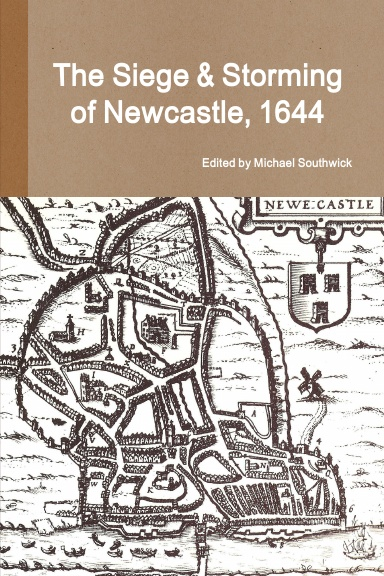
The Siege & Storming of Newcastle, 1644


Before I began self-publishing on the Amazon KDP platform, I spent several years using another print-on-demand service, namely, Lulu.com . This website has been around for many years and is an excellent option in its own right for those interested in self-publishing - and it's free to use.

You can also purchase books via Lulu - simply browse their site and click away to your heart's content. I've published about a dozen books via them, and they can easily be found by searching their website under 'Michael Southwick' and 'Mick Southwick'. As for those of you interested in the history of Newcastle then I guess the above effort is the one most likely to catch your eye.

The Siege & Storming of Newcastle, 1644 is basically a reprint of an 1889 booklet which I have lightly edited to make it a little bit easier to read. The work is an amalgam of the many and varied sources on the great event, and provides the interested Novocastrian with an easily accessible account of the town's greatest moment of peril.

However, the Victorian scribe's turn of phrase did nothing to ease the readers' way through the labyrinth of archaic terms and phrases of the original sources in question, so I thought I'd try to make the text a bit easier to follow - hence the publication of this 40-page effort.

If you'd like to order a copy, then follow the links below. If you are prompted to set up an account with Lulu to do so, then don't worry: they're a kosher business and are easy enough to deal with.


Thursday, 29 December 2022

Bamburgh St.Aidan's (+ a little walk)


We spent Christmas in Seahouses this year. My son, having wisely begun a relationship with a lass from the village whose family run a number of holiday cottages, well, we were offered a two-night freebie. So why not. So a big thank you to Hannah and her parents Bryan and Caroline.

On Christmas Day itself we embarked on another leg of our North-East coast walk. Angie wasn't feeling too well, so we kept it to a modest stretch between Bamburgh and Waren Mill, then back across country to Bamburgh. Here are a few snaps:

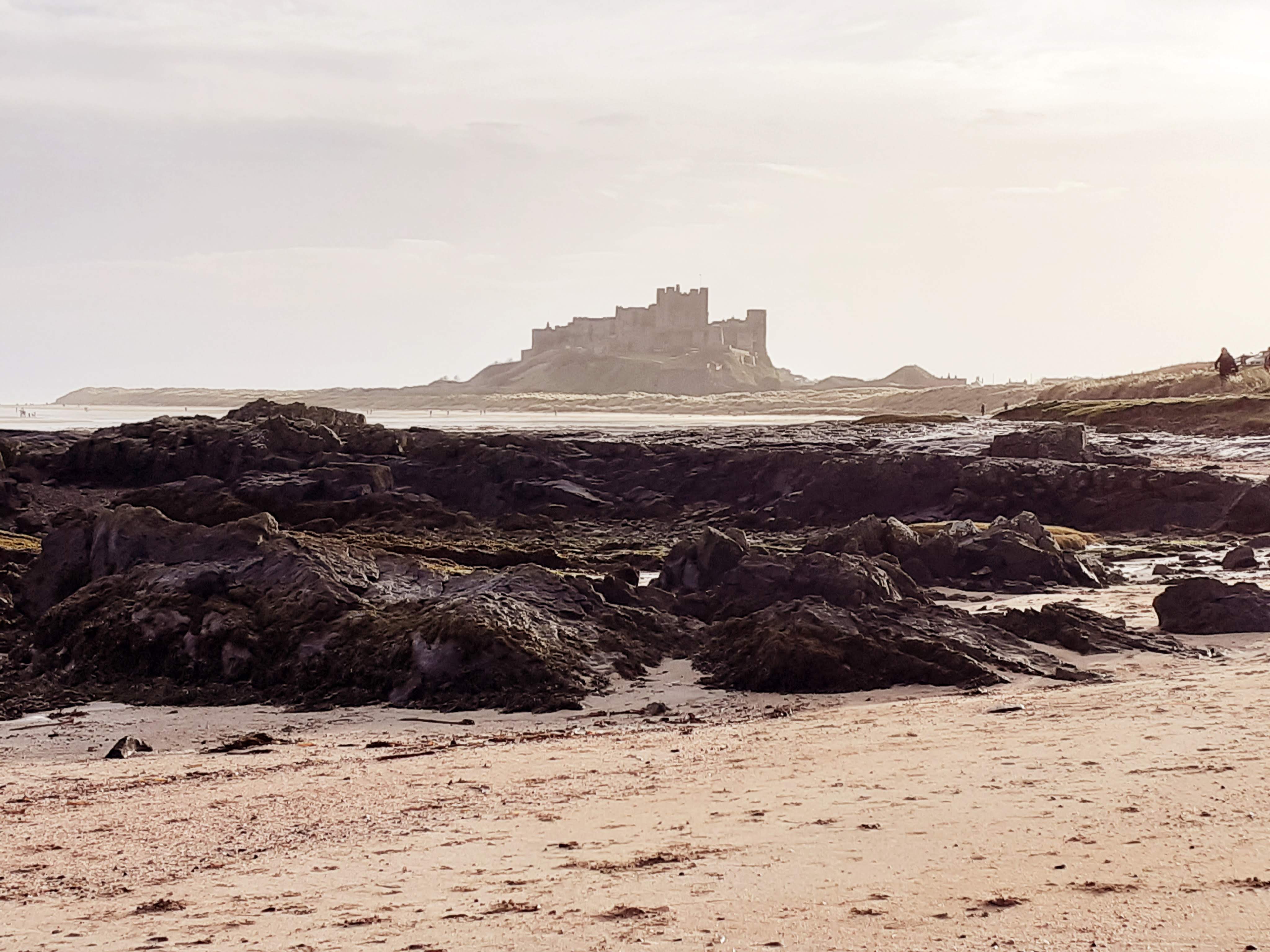
Bamburgh Castle, of course

Stag Rock

Info panel, Waren Mill (click to enlarge)

Heading back

After we got back we had a quick scout around St.Aidan's Parish Churchyard. The light was starting to go, but we quickly checked out the Grace Darling Memorial (more later) and had a look inside the crypt, which is accessed from the outside of the church. Here's a couple of pictures of the interior:

Crypt viewing platform

Ossuary

Interesting to note that the remains of the many unearthed skeletons in the nearby Anglo-Saxon cemetery were placed in the crypt/ossuary a few years ago. Anyway, the fading light forced us back to the car, and thence to our mountainous Christmas Dinner. 

Next morning (Boxing Day) we were supposed to be heading home fairly sharpish. However, I was keen to have another quick look at the church and churchyard to see what was what, and was somewhat overwhelmed by what I found. I left Angie in the car (still a bit poorly, and keen to get home) with the promise that I'd be back in "ten minutes or so". It was more like half an hour, really, which didn't please her - but I could have spent hours there. 

Anyway, I got the customary photo of Grace Darling's Memorial, the nearby burial site itself (about 40 yards to the south) and a few snaps of the church interior...


The original stone effigy that once graced the outdoor memorial 


St. Aidan's Shrine


Tomb of the mysterious medieval knight


The forked beam over the font - Aidan was supposedly leaning against this when he died in 651AD (though it wasn't in the ceiling at the time!)

There are loads of booklets and leaflets to buy, too, so take some cash with you if you do decide to pay the place a visit. And don't forget the crypt!

And that was about it. On Christmas Eve night we'd visited The Victoria Hotel in Bamburgh and The Black Swan in Seahouses (very nice they both were, too) - which all helped us to familiarise ourselves with a corner of the North-East which we didn't really know very well.

Very nice indeed. Get yourself up there ASAP.